|
Q:
|
what's the best temperature of copulation cerastes?
|
|
I've two cerastes, one is male (76cm); the other is female (65cm). What’s the best temperature of den and how long need I to keep before copulation? Do I need to stop feeding them before copulation? What are others important things I need to take care of?
|
|
Accepted Answer
|
4/5/2012 9:25:36 AM
|
|

Tiki108
|
|
Found this for you:
African Horned Viper
(Cerastes cerastes)
Distribution
This species of Cerastes is found in Egypt, Libya, Tunisia, Algeria, Morocco, Mauritania, Mali, Niger,
Israel, Sudan, Oman and the South Western corner of Arabian Peninsula. There are currently 4 subspecies of Cerastes cerastes recognized and these are Cerastes cerastes cerastes, Cerastes cerastes karlhartli, Cerastes cerastes mutila and Cerastes cerastes hoofieni.
It is essential when thinking about maintaining this and any other species of snake to spend as much time with an experienced keeper as possible in order to learn the safe husbandry techniques/handling methods.
Size
These vipers usually reach sizes of up to 75cm (30 inches), but tend to average around 60cm (24 inches).
Diet
In the wild Cerastes will usually eat lizards and small rodents. In captivity appropriately sized rodents are sufficient.
Requirements
- Heat Source: - This can be either reflector (spot) lights in green, blue or red, or ceramic bulbs. Although heat mats are a useful alternative. These should all be thermostatically controlled and guarded.
- Ultra Violet Light Source: - Require a Reptisun 5.0 UVB lamp. This should be left on for 12 - 14 hours a day and positioned no more than 30cm away from the basking snake. This requires replacing every six months unless otherwise stated by the manufacturer. This will create a day and nighttime effect as well as give your snake sufficient levels of UV to allow vitamin D3 synthesis.
- Thermostat: - An essential part of every vivarium and is required to control the heat inside the vivarium and to prevent your pet from becoming too hot or too cold.
- Wire Mesh Guards: - These should be fitted over all heat sources used in order to prevent any thermal burns from occurring.
- Thermometers: - One should be placed at either end of the vivarium. Never go by the temperature on the thermostat, as this is often inaccurate.
- Hides: - These are essential to prevent stress and allow your pet to hide away from the outside world. Artificial plants, boxes, plant pots, caves etc. all make excellent hides. Whatever hides are chosen, ensure that they are easy enough to remove with the use of tongs to facilitate safe cleaning of the snake.
- Housing - This should consist of a dark wooden Vivarium with glass frontage and adequate ventilation or vision cage. Hatchlings can be kept in a smaller container inside their future Vivarium. An adult snake can be housed in a locked Vivarium measuring 90cm by 45cm by 45cm (3’ by 45” by 45”). This should always remain locked.
Temperature
The daytime temperatures should be maintained with a basking area, which reaches 35C (95F), with a cooler end which drops to around 26C (80F). The night time temperatures should be allowed to drop to around 17C to 22C (64F and 72F).
Humidity and water
This species requires a low level of humidity. A shallow water bowl should be kept at the cool end of the Vivarium so that it does not raise the humidity too much.
Longevity
This species of snake can live up to around 17 years in captivity.
Substrate
Captive specimens should be maintained on a silica free, non abrasive sand (Such as calci sand and play sand). This should be maintained at a depth of around 10cm (4 inches) to facilitate burrowing.
Not sure about breeding, I've never kept hots, but hopefully someday I can, I have someone willing to mentor me about them, did you have a mentor and could they possibly help you out with some of this info?
|
|
|
|
|
|
|
|
Author Comment
|
4/5/2012 9:41:06 AM
|
|
zipxxx
|
|
thx, I've my first experience to feed these cerastes, even though they're vipers, I'd like to suceed to breed snakelet. anyway, thx for the information
|
|
|
|
|
|
|
|
Member Comment
|
4/5/2012 9:43:14 AM
|
|
Tiki108
|
|
Are you saying these are your first snakes? Have you ever bred any species of snake before?
|
|
|
|
|
|
|
|
Author Comment
|
4/5/2012 9:53:07 AM
|
|
zipxxx
|
|
no, I haven;t, this's first time to breed snake. with pathetic little experience, I'm learning how to breed them.
|
|
|
|
|
|
|
|
Member Comment
|
4/5/2012 10:08:23 AM
|
|
Tiki108
|
|
You probably should consider selling them in all honestly, venomous are very dangerous and aren't for someone with little experience, I've been keeping reptiles for almost 20 years and still don't feel ready to have hots. This species from my understanding is more difficult to breed, plus they are very dangerous and little anti-venom is available since they aren't that common.
With breeding any animal you have to ask yourself why you want to breed, are you doing it just because you can, for profit, for the fun of it? Most people recommend keeping a species for at least a year before even considering breeding. Are you prepared for all the money it will cost and the time and effort. Not sure how many offspring this species produces, but even if it's like ball pythons and it's around 5-6 eggs, do you have 5-6 extra cages all set up for venomous? What if it's like corn snakes and there have been cases where they've had 40, do you have 40 cages, all set up with heat, water, substrate, etc? Also are you aware of your state guidelines? In most states you need a license to keep venomous snakes, in MD where I live it's flat out illegal unless you have an educational license, which I am working on getting.
With hots there are very few care sheets since most people don't want inexperienced people keeping them, this is how we end up with laws that prevent people from keeping these wonderful animals. The best way to learn how to properly care for them and breed them is to get a mentor in your area that will show you the in's and out's of caring for venomous since it's a lot harder than non-venomous. I'd try contacting your local herp society if you're hellbent on keeping them and ask if they can get you in contact with someone who keeps venomous in your area.
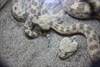
Also from the looks of your profile pic you appear to be co-habing them, 99% of snake species do very poorly when kept together for long periods of time, they are solitary animals and there are many recorded cases of snakes eating each other, or becoming so stressed by their cagemate they die or stop eating until they die.
|
|
|
|
|
|
|
|
Author Comment
|
4/5/2012 10:48:29 AM
|
|
zipxxx
|
|
thanks so much for yr kindly suggestion,
I bred these vipera cerastes because I really really love them, from my childhood, I like to observe kinds of the reptile outdoors, now I've got change to feed them, you know, all things are difficult before they are easy, I'm getting to know their habits and how to make them live more confortable.
Actually, I'm living in western of China, the climate here is suitable to breed cerastes, unfortunately, there's nobody around me breeding them, maybe I'm the first man.
the pic I showed is only when I tried to see if they can do copulation, most of time I seperated them in two boxes.
Do you have any documents or website that I can do more studying. thanks so much!!
|
|
|
|
|
|
|
|
Author Comment
|
4/6/2012 1:36:48 AM
|
|
|
|
|
|
|
Member Comment
|
4/6/2012 7:17:29 AM
|
|
Tiki108
|
|
Once you select an answer the question is considered answered and put under the answered questions area, which people don't usually check since they are assuming the question is answered. Try posting another question 
|
|
|
|
|
|
|
|
Author Comment
|
4/6/2012 11:04:10 AM
|
|
|
|
|
You are not logged in. If you would like to participate (it's free!), you must log
in, or Become a Member!
|
|
|
|
Most Popular Tags
Ball
,
Ballpython
,
Bci
,
Behavior
,
Boa
,
Breeding
,
Buying
,
Caging
,
Care
,
Chondro
,
Cornsnake
,
Crested
,
Crestedgecko
,
Eggs
,
Feeders
,
Feeding
,
Feedingproblems
,
Gecko
,
General
,
Genetics
,
GTP
,
Health
,
Heating
,
Humidity
,
Identification
,
Illness
,
Incubation
,
Infection
,
Leopardgecko
,
Mites
,
Morelia
,
Morph
,
Morphs
,
Parasites
,
Python
,
Regius
,
Respiratory
,
Shedding
,
Snake
,
Substrate
|
Latest Questions
|
|
|
|
points:150
|
|
|
|
points:100
|
|
|
|
points:250
|
|
|
|
points:100
|
|
|
|
points:250
|
More Questions
|
|
|
Latest Answers
|
|
|
|
points:250
|
|
|
|
points:150
|
|
|
|
points:100
|
More Answers
|
|
|