|
Q:
|
Feeding problem in Red-Tailed Rat Snake (gonyosoma oxycephala)
|
|
In Relation To:
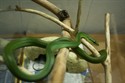
Red-Tailed Racer
|
|
|
I have a 4 months old baby Red-Tailed Ratsnake. I started keeping it since it hatched. From the first meal until today, it only feeds through tease feeding, which is done by holding at the neck of the snake and slap the face of the snake with fuzzy mice. I've tried almost every methods: live/dead fuzzy and pinkies, leave live/dead overnight or in small non-transparent container, house gecko, braining, make the pinky dance, covering the whole enclosure with newspaper for 1 week before attempted to feed... literally all the conventional methods. Normally if it doesn't feed voluntarily, i'll do the tease feeding. But the best thing is tease feeding works really EFFECTIVELY with this snake. Normally all i need is just ONE attempt to make it swallow. It rarely spits it out. I offered food every 1 week or 2 weeks. Longest was 3 weeks. After starving it, it wasn't interested to eat as well. So far it is growing nice and is in good shape. But it just won't feed by itself. Will it get used to the tease feeding method and will never stike at prey anymore if i do this at every feeding session? How can i get it to feed voluntarily?
The setup and environment is just nice: Arboreal tank with branches and hiding place, 30c - 31c day time and 27c - 29c night time, Humidity 60% - 90%.
Anyone has worked with this particular species' babies before?
I've read that this species is difficult to get them started by their own.
Thanks.

|
|
Member Comment
|
11/20/2010 10:27:55 PM
|
|

FyreFocks
|
|
Have you considered brumating the animal? Sometimes a nice cold spell will bring out the apetite in an animal.
|
|
|
|
|
|
|
|
Author Comment
|
11/20/2010 10:32:29 PM
|
|

austinlai
|
Hmm... I don't think so because i'm from Malaysia and there's no winter. Investing an air-conditioner just for the brumating purpose seems a little bit extreme for me...
:-(
|
|
|
|
|
|
|
|
Member Comment
|
11/20/2010 10:40:37 PM
|
|
FyreFocks
|
Then my only other suggestion would be trying a different meal. Have you tried a nice fat steak? Maybe some bacon? Everyone loves bacon.
Seriously, there must be some kind of cool period in malaysia. Some kind of climate change to trigger breeding instincts in females. Or is there a stormy season where the pressure changes?
|
|
|
|
|
|
|
|
Author Comment
|
11/21/2010 12:43:29 AM
|
|
austinlai
|
|
Bacon...? Hmmm... maybe it worths a try. But so far one more thing i havent tried is scenting with birds, since WC birds might have parasites~
What did u mean by triggering breeding instinct in females?
At the month this snake hatched (July), it was the hottest period in the year, no rain, which temperature went as high as 33c - 34c.
This month is cooler with much more heavy rain almost everyday. around 30c - 31c maximum.
|
|
|
|
|
|
|
|
Member Comment
|
11/21/2010 8:35:56 AM
|
|

AAS
|
The following page and the remainder of the website (links at bottom of page) has some info you may find useful. I have used the "butter tub" method for a number of young snakes since he suggested it to me, it almost always works. His name if Freight Frietas, and though he sold off his breeding group of gonyos he was one of the few (if any other?) successful breeders of this species in the US. I'm sure he wouldn't mind emailing with you about this if you follow his contact link.
www.oxyjansen.com/CareSheet.htm
By the way, the tub has to be REAL small and opaque.
|
|
|
|
|
|
|
|
Member Comment
|
11/21/2010 9:09:33 AM
|
|
FyreFocks
|
|
There is usually a season cue that lets females know that its time to ovulate. I brumate my corn snakes because its what they would do in the wild, and when they wake up, they know winter is over and its breeding season. I was hoping that if you didnt have a cold season, maybe you had a period of heavy rain, or perhaps the opposite, a period of very light rain, or SOMETHING seasonal that happens before breeding season. You cant tell me that your weather is the same all year round.
|
|
|
|
|
|
|
|
Author Comment
|
11/21/2010 9:29:30 AM
|
|
austinlai
|
AAS: Yes, i did read this article since this is the most reliable caresheet i can find in the net. Small enough means to the degree where there's no space for the snake to move? Should i put in a live pink or dead pink for better result? I've only tried with one tub which has few space for it to move within.
FyreFocks: Yup, this month is having the most rain in this year. I'm guessing that this rainy season still have some more time to go. :-)
Thanks for the kind replies guys. I just bought an unscented soap. I'll see if i can work something with it during the next feeding session.
|
|
|
|
|
|
|
|
Accepted Answer
|
11/21/2010 10:02:45 AM
|
|

HurricaneJen
|
How big of a cage is it and how are you lighting it? I had a friend successfully breed and hatch some red tailed rats (I am particularly partial to the asiatic ratsnakes myself!) and his fed like little champs - his harder problem was humidity. Since you live where they occur naturally, you're lucky enough that you should have an easier time with that part at least.
His set up for babies was a 12x12x18 glass terrarium with a 5.0 compact fluorescent (UVB bulb) on the top and a live pothos within it. He had a 50 watt basking light on there and a heat pad on the back for night time. simple but effective!
The other thing I would suggest is if you have a larger cage and can maintain that high humidity, increase your basking temperature to 32 - 34 degrees celsius. I know it seems high, but when I've acclimated wild caught adults, that's the basking temperature they've thrived best under. You need a cage large enough to accomodate a wide temperature range though, and for a baby that may not be the most ideal. Was your baby captive bred or farmed?
Last but not least...snag some bird feathers!! Pick up a couple live mouse pinks (a size smaller than the prey item you're currently offering), and put them nestled in the bird feathers in a small cup within the cage overnight. This works with mangrove snakes more often than not, since they raid bird nests in the wild and can be intimidated by larger prey items. Once you get it feeding regularly again you can go back up to regular sized meals - that same friend with the red tailed rats has the most massive breeding pair of mangrove snakes I've ever seen, and they eat normal sized prey items.
Chicken feathers also work if you're very concerned about parasites, but I wouldn't be. There's a slight chance of them, yes, but your snake also probably houses salmonella and other lovely diseases too. Try to get feathers without poop on them and the worst parasites for your snake will be avoided.
|
|
|
|
|
|
|
|
Author Comment
|
11/21/2010 12:50:34 PM
|
|
austinlai
|
Its a Captive Hatched baby. Now it's about 4 months old. I don't give any lighting for it, just normal day and night routine. Since the temperature is just nice, 30c - 31c daytime, 26c - 29c night time. I guess i don't need any extra lighting or heating... :-/
But offering a large cage seems will stress it out... I'm currently keeping it in a 30cm L x 20cm T x 15cm W plastic made cage. So offering a wide temperature range seems not that feasible. It has lots of branches for climbing and a hide. Humidity is good. At the range of 60% - 90%. The tank allows it to move freely inside but not too big.
Thanks for the info regarding the idea of artificial bird nest using bird feathers. Will definitely try this at the coming feeding sessions. :-)
|
|
|
|
|
|
|
|
Member Comment
|
11/21/2010 11:14:21 PM
|
|

aaron
|
|
Alright, I have nothing to add really... I just wanna say I love this site.
A homebrew non-feeder, who is an "import" species to many here... I aliken this to a yank giving aid to a guy in Indo who is having a chondro non-feeder baby. When it boils down to it, this is pretty damn cool.
What do they eat in the wild? With chondros, the scents have been frog and feather for me. Also hamster. But I love this idea of feathers and a live pink in it, I'm going to steal that when I get the chance. Some chondros won't eat with pestering, but would take frogs. Right scent, no movement, confident undisturbed snake. Between the minimal movement and right scents, with some chondros, that would be gold.
Really great question here, Austinlai, very well written.
Thanks to all who are participating, PLEASE follow up with this and let us know what happens, and how the trials go. This is great stuff right here.
|
|
|
|
|
|
|
|
Member Comment
|
11/21/2010 11:20:57 PM
|
|
FyreFocks
|
|
This shameless plug brought to you by our fearless leader, Aaron Florian.
I would also be curious to see how the young animal progresses.
|
|
|
|
|
|
|
|
Member Comment
|
11/21/2010 11:43:31 PM
|
|
HurricaneJen
|
|
I was recommending an increase in temps of a couple degrees - in celcius it's only a 2 to 4 degree increase but in farenheit it's a 5 to 10 degree increase - to us americans that's huge! Consider it in people terms - if we were too cool by 5 degrees we'd be considered very very sick, yet the snake is supposed to be okay without being offered slightly higher temps? Try kicking up the temps one or two degrees and see what that does.
I also was trying to suggest adding a source of UVB lighting. It's very under-considered in snakes, but I've found it helpful in some species typically considered difficult. What do we know about the behavior of wild baby red tailed rats? Have you had the opportunity to see any in the wild? I know I haven't been able to find much, if any, information on them, and I seldom see anything smaller than 2 or 3 feet imported in. To me, this says babies are hard to find, and probably up high in the trees where they're caught less. High in the trees = more light. Can't hurt to try a little 5.0 UVB light or to try throwing in a live plant to see what it does. You'll need the UVB light to keep the plant alive anyway. :)
Aaron, since you're in the states and better able to get captive bred bird feathers, try to get down feathers and/or feathers that are dirty (poop, dust, etc). They smell the most and seem to work the best!
|
|
|
|
|
|
|
|
Author Comment
|
11/22/2010 3:17:10 AM
|
|
austinlai
|
|
Aaron: It's my pleasure to have you replied in my topic here, leader. :-) Can see that u're a big time chondro fan! Will definitely keep u guys updated about its feeding status.
Fyre: LOL at the "shameless plug"~
HurricaneJen: I'll see what i can do with bird feathers 1st since this is most convenient for me to get at the moment. I'm currently pursuiting my study at a rather rural area. And getting Exoterra lighting products and silk plants is impossible here unless i get a chance to head back my hometown, mayb during next weekend. :-) I've never used any lighting in all my collection before. My collection are mostly native species and they do well in the normal temperature.
According to one article i read in RatsnakeFoundation which is about the prey of ratsnakes in the wild. Surprisingly to me Red-Tailed Ratsnakes do not consume frogs and bird eggs which i originally thought they do.
|
|
|
|
|
|
|
|
Member Comment
|
11/22/2010 5:04:59 PM
|
|
AAS
|
|
Regarding the "butter tub" method.... the prey is dead, the tub is opaque and small enough that the snake can't readily move away to one side. Guessing a typical margarine tub would work for your snake at this point. Put him in with the food item, put the top on and leave it in his cage, check now and then. Honestly, I don't think this method has failed me for any colubrid spp. Good luck to you....
|
|
|
|
|
|
|
|
Member Comment
|
11/24/2010 12:33:38 AM
|
|
HurricaneJen
|
|
Not silk plants, live plants! Try live plants.
The rest of your collection is eating well on its own, this snake is not. Thinking outside the box sometimes does the trick, not only with temps but with lighting and cage decor. :) Best of luck!
|
|
|
|
|
|
|
|
Author Comment
|
11/26/2010 2:12:18 AM
|
|
austinlai
|
|
Alright!!! What a great surprise today guys!!!
And the best answer award goes to HurricaneJen!!!
This is what i did:
I used a small container, cut a small hole on the top cover, bought a live bird, picked a few feather from the bird and put those feathers inside the container.
Then i washed a fuzzy with water... threw it into the small container along wif the feather to let them mix around for about half an hour. Then put some newspaper pieces inside to make it more like a nest.
Then i put the whole small container into the snake's cage. The snake took sometime to sense around the container... Slowly it decided to enter the container thru the small hole. Then took another few minutes smelling those feathers and the fuzzy. I thought they're going to make friend again inside the container. But... around 10min later, "WHACK"... The fuzzy was constricted!!! This "Bird Nest Method" really works wonder for my Gonyo. I think most probably it's becoz of Gonyo's arboreal behavior.
But the sad thing was, the fuzzy was not eaten. It was just killed and left alone inside the container and the snake left it. But this is already a good starting point since this was the 1st time it striked and killed a prey by its own. I'll definitely try again the same method next session with a much smaller pinky. Thanks again to HurricaneJen and oso u guys for the tips given. :-)
|
|
|
|
|
|
|
|
Author Comment
|
12/8/2010 4:37:40 AM
|
|
austinlai
|
|
I got my lovely Gonyo to take 2 tiny pinkies with the "Bird Nest Method"... Really thanks a lot guys. :-) Thanks iHerp!
|
|
|
|
|
|
|
|
Member Comment
|
12/8/2010 6:40:13 AM
|
|
|
|
|
You are not logged in. If you would like to participate (it's free!), you must log
in, or Become a Member!
|
|
|
|
Most Popular Tags
Ball
,
Ballpython
,
Bci
,
Behavior
,
Boa
,
Breeding
,
Buying
,
Caging
,
Care
,
Chondro
,
Cornsnake
,
Crested
,
Crestedgecko
,
Eggs
,
Feeders
,
Feeding
,
Feedingproblems
,
Gecko
,
General
,
Genetics
,
GTP
,
Health
,
Heating
,
Humidity
,
Identification
,
Illness
,
Incubation
,
Infection
,
Leopardgecko
,
Mites
,
Morelia
,
Morph
,
Morphs
,
Parasites
,
Python
,
Regius
,
Respiratory
,
Shedding
,
Snake
,
Substrate
|
Latest Questions
|
|
|
|
points:150
|
|
|
|
points:100
|
|
|
|
points:250
|
|
|
|
points:100
|
|
|
|
points:250
|
More Questions
|
|
|
Latest Answers
|
|
|
|
points:250
|
|
|
|
points:150
|
|
|
|
points:100
|
More Answers
|
|
|