|
Q:
|
SICK GTP - Trying to diagnose strange behavior
|
|
In Relation To:
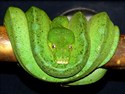
[RG0910]
|
|
|
First and foremost I would consider myself a novice reptile expert with over 15yr experience, so please keep all the "Take Her To The Vet" Common Sense responses off this thread. It is not helpful and clogs up actual information. ;)
That being said, I have a very strange problem that I have never witnessed before affecting my 3yr old GTP female.
3 months ago one of my carpets had similar symptoms, I took him to the vet, paid hundreds for tests and treatments. The vet couldn't find anything wrong even with the floats and could give me nothing helpful. The snake died a few weeks later. Now I believe I am seeing the same symptoms in my GTP and it is obviously alarming. Here is the timeline and current status.
3 weeks ago she regurtated a very small prey item.
She became grounded after that and showed signs of weakness in her upper body not being able to stand up and hold a upright pose. Very weak neck muscles which I assumed were from the food coming back up.
After that I noticed her churning her torso in waves and appearing very uncomforatble with her stomach. I thought maybe she might be becoming a lady, so I just watched. A week had passed and still no recovery.
Since then she has exhibited the following symptoms.
*Defication with prolapse, she was prolapsed for 24 hours, I put her on a cool metal bar overnight and it retracted on it's own, hasn't come back out. (about 18 days ago)
*Neuro problems with motor skills and balance, head waving back and forth, going upside down ect. (Then and now)
*Lack of strength in upper body. Lower body seems fine, but it appears there is irritation inside the middle area. It looks like she is trying to adjust her body to be more comfortable, sometimes propping it up on stuff or just looping it up into the air. I have been massaging her track in strokes trying to help digestion in any way I can trying to see if can feel any impaction, I do feel muscle tension but nothing lumpy inside.
When I coil her up around my wrist and try to warm her belly up with my hands i give her a squeeze and she starts squeezing back. (Not agressively, we have a really good relationship,) but she tenses up and hold on pretty tight and stays that way. Definatly squeezing not just sitting there tightly. However I am kind of relieved she still has that strength to do this, but it is not common behavior and belive she is trying to remedy the discomfort.
Her tounge is flickering fast still and she has fight, and it's only been a few weeks since she regurtated her meal to start this whole thing.
We have been experiencing dramatic temp swings up to 30* in a 24hr period here in MI, so I thought that was the initial cause, but her respitory system is fine and there is no wheezing ect.
I am leaning towards bacterial or viral at the moment, I have treated her twice with baytril this week, she is quarentined in a shoebox tub, still showing fight and a will to get better. But she can't balance very good or extend herself ect.
I'm really looking for some input from people who have specific experience with dealing with arboreal medicine and more so digestive complications ect. Before I spend another few hundred so the vet can tell me "I'm Clueless and the floats came back negative" I'd like to try and figure out what is actually wrong.
Thanks in advance!
|
|
Member Comment
|
5/27/2012 11:24:35 AM
|
|

zharper
|
|
That sounds alot like Inclusion Body Disease (IBD). IBD has no cure and is always fatal. It is very contagious and can hide symptoms for months; therefore, your first snake might have had it and given it to this snake. There is tons of information on the topic, so do your research and watch a few videos of snakes with IBD. Before taking action be certain that it is IBD because your only option is Euthanization. Also, IBD only festers itself in Boids (Pythons and Boas). Hopefully this is not the case for you. Best of luck and keep us posted!
|
|
|
|
|
|
|
|
Member Comment
|
5/27/2012 11:35:50 AM
|
|

Doomtrooper
|
|
Just becouse the floats came back negative last time It dosen't mean they will come back negative this time .. It seems like your animal has some sereous stuff going on .. Random dosage of meds isn't going to help anything ...Baytril is for an RI Most regurges are from parasites .. the muscle things sounds almost Nuro when the heat swung way up did your cage over heat ??? Prolapse is most often caused by dehydration or over feeding .. .. I know you dont want to hear this but you need to find a real Herp Vet .. I have had visits with meds and tests that cost about $130 it's a small price to pay to save GTP that most likely cost 3 times that or more .. Good luck
|
|
|
|
|
|
|
|
Author Comment
|
5/27/2012 11:58:08 AM
|
|

JWieczerza
|
|
Not random, using 2ml per quart from a 10% solution. This is the same antibiotic I've been using for the last 5 years and cured and prevented many infections. I used this solution on my leo firefox when I had to re-insert his organs into a dime size hole in the side of his body cavity. I treated him every other day for 2 months and eventually he made a 100% recovery with the only thing between his organs and the air was a piece of nonstick gauze and some surgical tape. So I trust it with their life.
Yes the cage hit about 95* and 100% humidity when the first heat wave came in, I wasn't home ect and didn't have the air on ect. I'm thinking that's what made her regurg and started this all. But still doesn't explain the stomach churning.
I'd gladly pay $130 for some real help. I'm used to getting bills for $300 and no benefit what so ever. $25 for this, $75 for that, ect. Last time they charged me $25 just for a couple mililiters of de-wormer as a preventative. That is seriously bullstuff in my book. It's not that I don't want to spend the money or take the time, it's that finding someone trustworthy who knows about herps and isn't just bullstuffing me to get business is the problem. This is Detroit, we had 44 shootings and 8 murders last week alone. There is no economy and people will say anything to get your money.
I paid enough for this girl and she is one of my favorite personalities. Her health is priceless to me.
|
|
|
|
|
|
|
|
Member Comment
|
5/27/2012 12:04:03 PM
|
|
FFReptiles
|
|
Hello JWieczerza,
Don't take anything I say as absolute. I have been keeping snakes for around... 6 years now, which is very little. Sadly, I had the chance of tackling almost any possible complication a snake can throw at you- I am pretty strict about the condition I keep my snakes at, so it's just bad luck.
Recently, allot of my collection has been compromised to Cryptosporidium... it began when a female Boa of mine displayed similar symptoms- a distortion in the locomotion of the upper extremety. She passed away, I sent her to a post mortem, heard the diagnosis, and sent stool samples to a lab from my entire stock... sadly, around 60% were carriers... some I euthanized, a few I am trying to "rescue". It is pointless to get into it here since we still lack a definite diagnosis.
Inclusion Body Disorder is also an issue, and the only way to completely rule out its' existence is to send a biopsy test to a lab that knows how to detect IBD.
Sadly, in both instances, once the snake is symptomatic, it's usually a one-way streak and the animal will lose the fight.
I suggest sending the snake to a post-mortem should she not make it. Meanwhile, the only thing you can do is keep her at the higher spectrum of of temp gardient, and maybe try using Reptaid- it is made from natural ingridients and is supposed to give a boost to the snake's metoblic and immune system.
To rule out Crypto- a stool sample needs to be sent to a lab that can conduct a fast acid stain test.
Regardless- I would STRONGLY advise to keep her at strict quarentine- use single use gloves, do not clean her water dish with the same sponge you'd use the other snake's... no contact what so ever. If it's indeed Crypto- the occysts are insane resilient and can easily infect an entire collection(as it happened in mine) quickly without anyone being the wiser.
|
|
|
|
|
|
|
|
Author Comment
|
5/27/2012 2:00:58 PM
|
|
JWieczerza
|
|
Sigh... Thanks guys, looking up IBD on youtube I am not liking what I see. Particular the part how they are too weak to crawl back up from being suspended and the head flailing... Not looking good over here...
That being said, I'm not taking a possibly terminal animal to the vet so they can charge me for a visit and then offer to ternimate it for even more money. I already know that routine.
So how many weeks should pass before I can rule it out at not IBD? Supposedly they only have a couple weeks once the symptoms show up. How long should I wait before ruling out something else? I'm sure I can keep her alive if it's something else, that's not the issue. The issue is IBD being a dead end road no matter what I do.
|
|
|
|
|
|
|
|
Member Comment
|
5/27/2012 2:10:08 PM
|
|
FFReptiles
|
|
The period of time the prognosis takes for the snake to become terminal and perish is not an indication to anything... you can't, sadly, rule out IBD in that way... only via post-mortem.
Crytpo, too, is a dead end- and the snake can linger for ages prior to dying. Both are possible. The reason why I sent the first mortality to post-mortem was because I suspected IBD- there definitely was neurological damage at that point, but IBD was ruled out in Histology testing conducted on tissues from all the internal organs.
I would however consider cutting out the middle-man and try to locate a commercial lab that will run the tests directly for you(that's how I did it)- better yet, you can test Crypto via fecal testing at home with a kit... you need to know what you're doing, but it's possible.
|
|
|
|
|
|
|
|
Member Comment
|
5/27/2012 2:14:58 PM
|
|
Doomtrooper
|
|
If it is IBD It most likely didnt come into your collection from the GTP.. I would be concerned that your boa may be a carrier ...
|
|
|
|
|
|
|
|
Member Comment
|
5/27/2012 2:16:42 PM
|
|
FFReptiles
|
|
I'd be concerned about the whole collection actually, as the exact manner of transmission has yet to be determined... sadly.
|
|
|
|
|
|
|
|
Author Comment
|
5/27/2012 2:20:45 PM
|
|
JWieczerza
|
|
Oh believe me I'm already looking into how to get everyone tested! No way can I afford to have this thing wipe out the breeders! Thank goodness the leos and monitors are safe!!!
|
|
|
|
|
|
|
|
Author Comment
|
5/27/2012 2:22:48 PM
|
|
JWieczerza
|
|
http://www.azeah.com/Care-Sheets.asp?id=219
I love this website :)
|
|
|
|
|
|
|
|
Member Comment
|
5/27/2012 2:23:43 PM
|
|
FFReptiles
|
|
If it's Crypto, your lizards are not safe.
Do you have basis to rule out Crypto?
|
|
|
|
|
|
|
|
Author Comment
|
5/27/2012 2:36:24 PM
|
|
JWieczerza
|
|
Well just from what I've seen in the past with the leos they get pretty skinny real quick and have greasey mucus filled stools... Keeping my eye on that one ALWAYS as they actually sent me this in the mail when I moved here last year.
Quote=
"Cryptosporidium is a microbial pathogen found in surface water throughout the U.S. Although filtration removes Cryptosporidium, the most commonly used filtration methods cannot guarantee 100 percent removal. Our monitoring indicates the presence of these organisms in our source water. Cryptosporidium was detected once, during a twelve-month period at our Detroit River intake plants. Current test methods do not allow us to determine if the organisms are dead or if they are capable of causing disease. Ingestion of Cryptosporidium may cause cryptosporidiosis, an abdominal infection. Symptoms of infection include nausea, diarrhea, and abdominal cramps. Most healthy individuals can overcome the disease within a few weeks. However, immuno-compromised people, infants and small children, and the elderly are at greater risk of developing life-threatening illness. We encourage immuno-compromised individuals to consult their doctor regarding appropriate precautions to take to avoid infection. Cryptosporidium must be ingested to cause disease, and it may be spread through means other than drinking water.
Pleasant isn't it. Make sure you dip your dishes in 2% bleach water!
|
|
|
|
|
|
|
|
Member Comment
|
5/27/2012 2:41:44 PM
|
|
FFReptiles
|
|
There are two problems with what you stated:
1- my Boa died without becoming skinny, nor even regurgitating once. So you can't rule out Crypto based on that(Actually, IMHO your'e better off with Crypto since it is easier to diagnose it).
2- The infection mentioned is due to Cryptosporidium Parvum, an entirely different strain from Cryptosporidium Serpentis- Bleach does nothing to Cryptosporidium Serpentis I'm afraid.
I'll quote my answer from another thread:
1- Snakes and Lizards can harbor the parasite and not show symptoms for ages. Due to a rapid infection rate and the extreme resilience of the Occysts, it is likely much more common in reptile collections than one would believe.
2- Occysts can withstand: Alcohol(hand hygiene is nigh useless), Chlorine, Bleach, Freezing to -22 Degrees Celsius( an experiment froze occysts for 775 hours, 2% of the culture remained active and capable of infecting), remaining on dry surfaces for up to 6-8 months.
3- The most common infection occurs when occysts are ingested via drinking water.
4- Occysts are susceptible to: prolonged exposure(8 hours) to: Ammonia, Saline solution(10%). Susceptible to snap freezing or steam heat at 45-60 degrees Celsius for 6-9 minutes.
5- There is no cure for Crypto, though currently I am trying a mix of two substances on 3 animals, 2 of which had a low Crypto count in their stool sample. I will say more when I get more results.
6- Crypto is insanely contagious… 70% of my collection was compromised within a very short time frame. I used the same sponge for all the water dishes… most people do… also, it's a matter of cleaning poop, and coming in contact with another animals' water dish… even if you did clean your hands.
I would not be quick to rule out Crypto- it is a deal more common than one things, and can be a quick hitter, as my case proved.
|
|
|
|
|
|
|
|
Member Comment
|
5/27/2012 2:43:20 PM
|
|
FFReptiles
|
|
PS Crypto Serpentis doesn't do anything to humans and mammals if ingested- which is good and bad. Good because we're not going to suffer from it, and bad, since it doesn't receive the same attention research-wise.
|
|
|
|
|
|
|
|
Member Comment
|
5/27/2012 3:01:11 PM
|
|

Evenstar
|
|
IBD is often blamed for any neurological signs a snake may display, but it is a common misdiagnosis of either crypto or OPMV. It is vitally important to find a herp vet that you do trust and work with that vet to determine an accurate diagnosis and treatment plan. I understand that you don't want to shell out money for multiple tests that ultimately prove futile, I wouldn't either, but we can only make assumptions based on non-observed described behaviors here on this forum. A qualified herp vet will perform tests and evaluate results with quantitative means and observed behaviors and compare to published information in an attempt to draw the correct conclusions and work with you to develop effective treatment options.
I strongly suggest you read over this thread on BP.net which describes similar symptoms in a Children's python. It may be quite helpful to you....
http://ball-pythons.net/forums/showthread.php?153647-The-Importance-of-Selecting-an-Experience-Reptile-Vet
And this is site expertly exlains OPMV....
http://labs.vetmed.ufl.edu/sample-requirements/microbiology-parasitology-serology/zoo-med-infections/opm/
I wish you the very best of luck. Please keep us updated on what you find.
|
|
|
|
|
|
|
|
Member Comment
|
5/27/2012 3:53:07 PM
|
|
FFReptiles
|
|
OPMV is less relevant since we're discussing a GTP, but Crypto remains a very likely possibility.
|
|
|
|
|
|
|
|
Author Comment
|
5/27/2012 4:29:02 PM
|
|
JWieczerza
|
|
Very good info gentlemen. I was not aware of the other strain of crypto, most of my experience has not been dealing with pathogens fortunately. I do own the "understanding reptile parasites" book and it literally says...
"An easily replaced substrate is vital because these oocysts are inactivated only by prolonged exposure to 5 percent ammonia or 10 percent formalin, neither of which is recommended for routine use. Ammonia is the cheaper and safer of the two. Cleaning cages with soapy water and bleach and frequently changing the substrate are important for mechanical removal of teh vast majority of the oocysts."
So FFP, what would you recommend I do with the entire collection of snakes and lizards to make sure I am not dealing with a ticking timebomb? Take everyone to a herp vet for examination of Crypto and other possible infections? I really don't want to see a chain effect of activation if everyone IS infected.
When I clean the cages and racks I literally put ALL the water bowls into a rubber garbage can with anti-bac soap water and bleach... From what you just said this won't prevent infection, and ALL my herps could have it...
|
|
|
|
|
|
|
|
Member Comment
|
5/27/2012 6:43:17 PM
|
|

Aimee
|
|
yeah, I have to correct a few mistakes on here.
1. IBD can be dormant for YEARS. not months, years. is it always? no - but it can be.
2. OPMV can affect pythons too and symptoms are similar to IBD, plus it is airborne. there have been several publications documenting OPMV in boids.
3. there is a strong likelihood that IBD is transmitted via a mite vector. if you had any snake come into your house with mites, especially if you were unfortunate enough to have the mites spread to others in your collection, the index case could be any snake.
4. also, IBD has been documented in colubrids as well as vipers, but not as commonly.
anyone who wants documentation to back this up, lmk and send me your email address - I'll pass on the pdf files of the research papers.
one of the sure signs of neuro issues is if you roll her upside down and she can't right herself. this might help you distinguish between intestinal issues and neuro issues?
the biggest problem with testing for crypto, IMO, is that a clean fecal in an animal that doesn't show symptoms is meaningless. unfortunately, there's not one sure way to make certain your collection's clean. if I were in your shoes, I'd do what FFR suggested and get a necropsy if she doesn't make it. neuro issues can occur from getting way overheated (think heat-stroke, brain damage) but it sounds like there's more going on with your girl than this one issue.
I'm so sorry you're going through this, and I hope everything turns out OK for the rest of your collection!
|
|
|
|
|
|
|
|
Member Comment
|
5/27/2012 6:56:31 PM
|
|
|
|
|
|
|
Member Comment
|
5/27/2012 11:45:03 PM
|
|
FFReptiles
|
|
"1. IBD can be dormant for YEARS. not months, years. is it always? no - but it can be." - not in Pythons though. Boas are believed to have the ability to be asymptomatic carriers of the diseases. Pythons however respond quickly, show symptoms and usually pass away very quickly once exposed.
"3. there is a strong likelihood that IBD is transmitted via a mite vector. if you had any snake come into your house with mites, especially if you were unfortunate enough to have the mites spread to others in your collection, the index case could be any snake." - actually that too is far from certain. Though there always seem to be mites where there's an IBD outbreak, the mite to this date was not proven or found to be the vector itself. They are currently testing to see if mites perhaps trigger some internal response in snakes which serves as a catalyst for IBD.
As for the stool sample- again, you're a bit hasty to rule things out. Matter of fact, one recommended way to go about things is to send 3 consecutive stool samples. If they all return negative, there's a good chance you're snake is fine. As someone who had to go through the ordeal, asymptomatic carriers in my collection returned Crypto positive results upon the very first test. Since the alternative(biopsy) is stressful and a deal more expansive, this remains the better option.
JWieczerza - As I said, going to a vet would simply mean that another person is entering the profit chain. Try to locate a commercial lab that would work with you directly. If/when the snake passes away, send her to a post-mortem. In the meantime, I wouldn't rule out sending a couple of stool samples from random animals in your stock just to get a glimpse if something is indeed brewing.
Since I never even heard of OPMV before, I am tending to believe that the likelihood of it being the issue is relatively low... it's possible apperantly, but I assume it's relatively rare for captive non-venoumous boids to get exposed and infected by it.
I would advise on the following:
1- Buy a steam gun. They are relatively inexpansive and are one of the best ways to sanitize vivs and so on, even against Crypto which is the hardiest of all the options raised in the thread.
2- Avoid sharing food foreceps and the like. Also, never pass a food item between different snakes if one was left uneaten.
3- Use single use gloves until you know what you're dealing with.
Most importantly, do not mourn for a loss that has yet to come to pass. Keep a level head, check your options and pick the best way to deal and check everything out.
Good luck,
|
|
|
|
|
|
|
|
Member Comment
|
5/28/2012 2:22:54 AM
|
|
Fishbone
|
|
I went through something like this a few years ago. It was miserable, and I shelled out allot of money. There are definitely tests for crypto, and there is a blood test for IBD, I didn't see if anyone mentioned that. It isn't a test that can "clear" an animal, or give it a definite clean bill of health, they look for inclusions in the red blood cells. And most pythons tend to go pretty quickly with this, and I would think a chondro would be on the faster side of that. I also agree with FF, don't completely rule out some other form of parasite. If you do this though, I would very specifically tell the vet the things you want the animal tested for. If they don't know much about it, ask them for a reference to someone who does.
I agree there is a strong likelihood of the mites transmitting IBD, but the fact that of yet, noone has even identified the retrovirus that causes it, or if it even in fact definitely is a virus, there is no way to be sure how it is transmitted, or how long it can live exposed.
http://labs.vetmed.ufl.edu/sample-requirements/microbiology-parasitology-serology/zoo-med-infections/boid-ibd/
And that brings me to my opinion on the saddest point here. You should get all of this done quickly, because if this is the case, the longer you keep that animal in the house, the longer you risk every other boa and python you have. (I haven't looked at your page yet, so I am not sure how many boids you have...) It would be well worth it to rule every option you can possibly rule out.
And to echo FF's point, you need to sanitize everything, and not let any chance of anything crossing from any animal to any animal. I am aware of the problems that can pose, I shan't explain what I went through here for a long time, but it is a pain. But that is even more a reason to get this all done as quickly as possible, and come to a resolution. Then you can make the difficult decisions if you have to. Send me a PM if you would like, I'll explain the things I did and went through. Though I did know where the problem started and came from, I never actually found out what "it" was, after almost $1000 in tests on 4 animals.
|
|
|
|
|
|
|
|
Member Comment
|
5/28/2012 12:13:54 PM
|
|
bsharrah
|
|
What did your vet test for and what tests were done? You mentioned floats but those are about the equivelant of "sticking your tongue out and saying ahhhh" and are only the start of a full exam.
|
|
|
|
|
|
|
|
Member Comment
|
5/28/2012 2:07:22 PM
|
|

aaron
|
|
I had similar with a Chondro ... no regurge that I can remember, but turned neuro, stargazed, all over the place body and muscle movement.
We killed the animal, ran all the tests, and ended up being a systemic Salmonella infection (which was susceptible to baytril). Im not sure if the baytril would have done anything, because the animal was far gone by that point (it was like a light switch actually).
Remember that snakes can only exhibit illness in a very finite number of ways. With a human, a fever can be anything from the flu, to strep to anthrax to whatever, and it's all the same symptom: fever. Snakes can't tell us, so there are lots of things that can make them sick, show up and look like IBD and OPMV and Crypto.
Best of luck
Also, for what it's worth, I use paper towels to be my "sponges" when doing water bowls. the only thing that goes from cage to cage are my hands which I wash between cages. And I'm still friggin paranoid that I'm not doing a good enough job.
|
|
|
|
|
|
|
|
Member Comment
|
5/28/2012 3:16:49 PM
|
|
aaron
|
|
Also, neuro issues can be a result of severe dehydration or overheating... I'm guessing that both of those are not the issue, but for anyone who finds this thread later, again, just because you see something that LOOKS LIKE something, it doesn't mean it is until you rule it out.
|
|
|
|
|
|
|
|
Accepted Answer
|
5/28/2012 5:53:17 PM
|
|

gfx
|
|
She is dehydrated. This will cause the neuro symptoms and prolapse. It takes a very long time for snakes to regroup from dehydration, like weeks. Do not feed her! Soak her, soak her, soak her. I'd soak 12 hours on, 12 hours off for the next 2 weeks, espcially with the Baytril injections. I doubt it's IBD, my money is totally on dehydration for whatever reason. Your Baytril will hopefully cover any bacterial infection, any viral infection that she'd be able to recover from will just take supportive care until she clears it, any neoplasia that's screwing up her system is non-recoverable. Soaks and Baytril for a couple of weeks, then continued soaks. Feeding stresses the system and allows whatever to get the upper hand, so resist the urge to feed her for a few months. She will be fine without meals, feeding a dehydrated/debilitated snake can/will kill them. Dehydrated animals will not use added fluids to digest, they will pull fluids from cells, exactly opposite of what you need right now. Keep temps normal, do away with night drop and keep your fingers crossed.
|
|
|
|
|
|
|
|
Member Comment
|
5/28/2012 7:36:19 PM
|
|
Aimee
|
|
FFR, I have to disagree. I'm not making this stuff up.
1. this information came directly from Dr Michael Garner, DVM, an expert veterinary pathologist. he feels that the one publication showing pythons dying fairly early is flawed - one, a concentrated injection of serum from an infected RTB would result in a higher-than-normal disease burden. two, he says that in his practical experience IBD is often complicated by other conditions and infections, and it's not proven that it was IBD that killed the pythons. in that study, yeah, they all died within a matter of months; this does not prove it is a truism.
3. this information comes directly from Dr Elliott Jacobson, DVM, of the University of Florida, one of the most respected reptile disease researchers on the planet. has it been published yet? no. he currently has a fellow in his lab running through enough samples to make it definitive, but he is personally convinced from years of experience and I trust his judgement.
as far as OPMV, Dr Adolf Maas in Seattle (Bothel) sees it much more often in his practice than IBD in snakes that are actually necropsied and diagnosed, that his opinion is that OPMV is more likely to be the cause of illness than the usually-assumed IBD.
I hope Julie and Aaron are right, and that it's dehydrated and fixable.
|
|
|
|
|
|
|
|
Member Comment
|
5/29/2012 7:03:11 AM
|
|
FFReptiles
|
|
No one in their right mind would say you're making things up.
Since my opinion is based on academic literature, personal experience and talking with vets though, I still stand by my opinion, without claiming that it has more merit.
|
|
|
|
|
|
|
|
Member Comment
|
5/29/2012 5:36:50 PM
|
|
Aimee
|
|
well-said, & thanks.
JW, how is she doing?
|
|
|
|
|
|
|
|
Author Comment
|
5/29/2012 7:35:05 PM
|
|
JWieczerza
|
|
GFX I think you may be correct!!! :D
She is looking a little better after being in the dark shoebox tub resting for a few days rather then laying on the coco chips.
Her neuro is looking better and more controlled, and her tounge is flickering rapidly. Still a little wobbily, but IMO she looks a little more focused.
Just took her out for a dose of the baytril water and she took it all on her own.
I will proceed with the soaks and update this thread as the condition moves either way.
Thanks to everyone who chimed in!

|
|
|
|
|
|
|
|
Member Comment
|
5/29/2012 7:48:07 PM
|
|
gfx
|
|
This is good news!
I had a problem a couple of years back where Fifty overheated while I was up at ChondroFest and I thought I'd lose him. It took a few months of daily soaks to get him back in shape. I really thought I'd lose him, but thankfully he made a full recovery. Keep up the soaks every day, don't fool yourself into thinking she's cured as it takes a long time for their kidneys to get back on track.
Love that she's held the blue dorsal triangles. Her brother, Sue, still has his as well. Neat clutch! :)
|
|
|
|
|
|
|
|
Author Comment
|
5/29/2012 7:58:51 PM
|
|
JWieczerza
|
|
Thank you! I will make sure to soak her well and not feed her. She is definately a strong one!
|
|
|
|
|
|
|
|
Member Comment
|
5/29/2012 11:55:25 PM
|
|
Aimee
|
|
oh, I'm glad she's feeling better!
|
|
|
|
|
|
|
|
Member Comment
|
5/30/2012 11:34:29 AM
|
|
|
|
|
|
|
Member Comment
|
5/31/2012 2:12:01 PM
|
|
|
|
|
|
|
Member Comment
|
6/1/2012 4:56:42 PM
|
|
Cherryhead
|
|
Good luck with her! Once I saw that people were talking IBD my heart sank for you. I lost my best friend Zephyr 1 to IBD and it's left me a bit scarred. I'm so thankful you don't have to go through that. It's horrible. I hope she makes a full turn around!
|
|
|
|
|
|
|
|
Member Comment
|
5/24/2013 12:41:53 PM
|
|
|
|
|
|
|
Member Comment
|
6/7/2013 10:53:12 AM
|
|
Cenobite
|
|
This question has had no activity for 14 days and will be closed by an administrator unless the original poster takes action. Recommended Action: Points awarded An administrator will select responses and assign points at their discretion. Original poster, please close this question out and assign points. If you have any further information in the resolution of your problem, please post it here so that others may learn from it.
|
|
|
|
|
|
You are not logged in. If you would like to participate (it's free!), you must log
in, or Become a Member!
|
|
|
|
Most Popular Tags
Ball
,
Ballpython
,
Bci
,
Behavior
,
Boa
,
Breeding
,
Buying
,
Caging
,
Care
,
Chondro
,
Cornsnake
,
Crested
,
Crestedgecko
,
Eggs
,
Feeders
,
Feeding
,
Feedingproblems
,
Gecko
,
General
,
Genetics
,
GTP
,
Health
,
Heating
,
Humidity
,
Identification
,
Illness
,
Incubation
,
Infection
,
Leopardgecko
,
Mites
,
Morelia
,
Morph
,
Morphs
,
Parasites
,
Python
,
Regius
,
Respiratory
,
Shedding
,
Snake
,
Substrate
|
Latest Questions
|
|
|
|
points:150
|
|
|
|
points:100
|
|
|
|
points:250
|
|
|
|
points:100
|
|
|
|
points:250
|
More Questions
|
|
|
Latest Answers
|
|
|
|
points:250
|
|
|
|
points:150
|
|
|
|
points:100
|
More Answers
|
|
|