|
Q:
|
Corn snake repeatedly ill with RI, help?!
|
|
In Relation To:
Lars
|
|
|
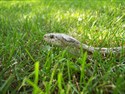
My adult Corn-Snake, Lars, has his apparently fourth respiratory infection this year at this moment. He did see a "qualified" reptile vet in the 3 prior incidencents, in which case he was prescribed a 7 day course of Baytril at 6.81mg in a 0.3ml injection suspension given once daily orally (22.7mg/ml). After the last illness and course of treatment the vet mentioned he probably needed 4-6 weeks of antibiotics at least, rather than the mere week he was given. They did not make this apparent, or clear at all for that matter, when informing me of what needed to be or should be done to isolate and eliminate the illness.
I'm searching for a new herp-vet (familiar especially with snakes in particular would be great). I'm located in Northwest Indiana, and would like any good recommendations nearby.
Though, my main inquiry is, what should my next course of action be besides a fecal and bloodwork panel being done at the vet as soon as possible? Should I administer antibiotics myself over a longer time-span? Or should I hold off until I get him into the new vet post-haste? I've done all the calculations with the consensus of others to be able to dose penicillin to his weight, and how to do so. Is this medication safe and effective? Should I try a longer round of Baytril? Or should I wait if possible for the test results to reveal the culprit pathogen? I've raised temps, humidity is low, and now I'm just trying to plot my next move in an educated manner. Any help greatly appreciated. Any questions needing answered I would be glad to fulfill. Thanks.
Attached Photos:
|
|
Member Comment
|
1/8/2013 10:22:17 AM
|
|

abi21491
|
|
I'd definitely get a culture to find out what is causing it. 1 week treatment is a waste IMO, it should always be longer to ensure that the bacteria is killed off and not made stronger by a short exposure to an antibiotic. I would also recommend Fortaz (Ceftazidime) so ask your new vet about it when you can. It is broad spectrum and less harsh than Baytril. I'd also suggest nebulization with F10 (1ml mixed with 250ml water) I had some snakes get seriously ill in 2010-2011 in which I had to treat them for several months with antibiotics and nebulization before they recovered. You can nebulize now without a prescription while you wait to find out what the culprit is, you'll just need a nebulizer (I use a Devilbiss 4650D) as well as F10. You can get nebulizers on ebay and elsewhere, as for F10 I buy mine from The Bean Farm online but other reptile sites sell it as well. Good luck!
|
|
|
|
|
|
|
|
Member Comment
|
1/8/2013 10:43:55 AM
|
|
|
|
|
|
|
Member Comment
|
1/8/2013 10:48:19 AM
|
|

Tiki108
|
|
The week of treatment sounds just long enough to create antibiotic resistant bacteria, also from what I've been told by several well known and respect herp vets, baytril is crap. My personal vet never has prescribed it when I've had to deal with an RI. Go get some ceftazidime and amikacin and do 1 dose of each (hopefully your vet can determine the amount to give based on weight) every 3 days for 10 doses total or somewhere around that is what I do, I can search for my pervious prescriptions to get the exact amount, but ditch the baytril for sure!
|
|
|
|
|
|
|
|
Member Comment
|
1/8/2013 10:49:29 AM
|
|
Tiki108
|
|
Oh yes, I second the trac swab culture that Abby suggested! All the ones I've done were always baytril resistant bacteria.
|
|
|
|
|
|
|
|
Member Comment
|
1/8/2013 10:50:02 AM
|
|

Sonja K. Reptiles
|
|
For sure try and get a culture taken to find out what you are dealing with.
I've also heard Zithromax is now being used for reptiles, and being it's a newer one, perhaps less likely that the bacteria is resistant to it. Another to ask about at least.
I know there is the thought out there that lowering the humidity is a good thing, but it's not the only like of thought. Personally, I don't agree and have discussed it with others that feel the same. Think of it in the context of what we do when we have one... doesn't a steamy shower or a vaporizer bring some relief...
|
|
|
|
|
|
|
|
Member Comment
|
1/8/2013 10:51:32 AM
|
|
|
|
|
|
|
Author Comment
|
1/8/2013 10:52:48 AM
|
|

visceralrepulsion
|
|
I forgot a couple of the details that may, or may not be of service also. First, when he becomes ill, it is swift, and pretty fierce in its' arrival. Yesterday he was seemingly fine, was held for awhile, and had no outwardly noticeable symptoms. BOOM, a few hours later he makes a noise, and I check on him, to find phlegmy nostrils, lots of mucus in the mouth, accompanied by clicking, and other very apparently abnormal noises. I'm sure it didn't just "appear" in a matter of 2-3 hours, but it went from seemingly normal to downright ill in that time frame. Also, I've checked, checked, rechecked, then checked my husbandry details again, to find no obvious correlation to his recurrent illness and my keeping that I can tell of. I've recited it over with the vet, everyone I've spoke with, and found no clear error in my ways, other than one person said they do keep their colubrids temps a tad bit higher, but that it was their personal preference. I can get a nebulizer readily, but how exactly do I administer the treatment? (Haha, I know it's probably obvious, but I'm mulling over this idea in my head and it seems easier solved by asking than by inferring! =p) I will inquire about this Fortaz, definitely. I'm a bit disturbed by the fact they were giving him an injection suspension orally??? I'm no expert, but I'm aware that those suspensions contain things such as anhydrous, and other foul chemicals that are assumingly safe for IV, IM, subcutaneous, etc injections, though I know are very harsh if taken orally and ingested. I've been curious about this. I felt the 7 day dosage of the medication was somewhat short considering the metabolism of a snake, but thought "Well, they're a vet, they must know, who am I to question?" I should have questioned long ago, indeed. Though, now I've learned to question anything and everything! I'm going to get blood and fecal panels done at the new vet, but should I just not treat until there are the results and more answers? (Besides nebulization.)
|
|
|
|
|
|
|
|
Member Comment
|
1/8/2013 10:58:20 AM
|
|
Sonja K. Reptiles
|
|
What are the animal's temps and have you tried bumping them up? It may be personal preference for some to keep at higher temps, or it may be that this particular individual you have needs higher temps.
|
|
|
|
|
|
|
|
Member Comment
|
1/8/2013 11:23:12 AM
|
|
NikiP
|
|
I don't have much to add other then double & triple check anything an MD or a DVM tells you. Maybe i'm just jaded, but I don't put much faith into that slip of paper telling me they know what they are talking about. Even when I feel like I can 100% trust them, who knows what may have been over looked.
|
|
|
|
|
|
|
|
Author Comment
|
1/8/2013 11:54:39 AM
|
|
visceralrepulsion
|
|
What I meant bka was that the person who said that kept all of their colubrids at a higher than "normally" kept temp range out of preference. Lars may indeed benefit from raised temps (I did raise them to 90ish on warm side), though he often snubs such temps to remain on and favor the cooler side when this is done =\ . The usual temps are 75ish F cool side, 85-88 F warm side. The humidity ranges between 45-55% on average or so. I didn't adjust the humidity for his RI, just was stating that it's not abnormally higher or anything.
|
|
|
|
|
|
|
|
Accepted Answer
|
1/8/2013 12:00:24 PM
|
|
abi21491
|
|
With the nebulizer, it should have a tube that pumps air out of it that comes out of the machine and connects to a cup that you put the medication in. With mine the air tube connects to the bottom of my medicine cup, and on the top of the cup is another tube opening that a breathing mask can be connected to for human use. I took a piece of larger aquarium tubing (like that of a aquarium syphon) and fitted it over the top opening, and then connect this tube to a tub (sterilite, rubbermaid) that the snake can be put into. I nebulize for 1-2 times daily at 15-30 minutes each session. Sometimes the F10 is all that is needed for treatment but it is safe to use in conjunction with antibiotics as well. Here is a crappy picture of my nebulizing cup connected to my old quarantine rack. Using a container with no or few air holes is best, but you can tape over the holes for the time being if you have nothing else.The zip ties were there to keep the bottom air tube from popping off ;) The cup should hold 5-10 ml total. And like I mentioned before you mix the F10 with water since it comes in concentrated form. 1 ml F10 to 250ml water is the recommended solution for both cleaning and nebulizing.

|
|
|
|
|
|
|
|
Member Comment
|
1/8/2013 12:00:41 PM
|
|

deadvenom
|
|
Look into Fortaz as an antibitotic. Its all I use. 3 week course and injections every 3 days. I had a boa with a chronic RI (Asthmatic type of thing almost) that would go awy with antibiotics but would come back at least twice a year at around the same time. Hope for the best!
|
|
|
|
|
|
|
|
Member Comment
|
1/8/2013 12:02:51 PM
|
|
Sonja K. Reptiles
|
|
You stated the humidity is low... what are you measuring the humidity level with? What is your reasoning for not raising the humidity?
|
|
|
|
|
|
|
|
Author Comment
|
1/8/2013 3:03:48 PM
|
|
visceralrepulsion
|
|
It's 45-55% on average. One person will tell you to lower, another will tell you to increase, I sit in that middle ground that doesn't believe I should manipulate that element and risk worsening the severity of it, when the cause isn't derived from the humidity. Bacteria grows in warm, moist environments. Seems logical to me. I'm measuring it with a Taylor thermo-hygrometer. They've always done me well as far as I can tell. I know you say it is a relief to take a shower when you are congested, however I find it very disturbing and feel quite short of breath even in a hot shower, let alone with a sinus cavity and mouth full of phlegm. That's just my logic, but I don't want to manipulate that element if I don't have to. I can see doing nebulizer treatments, but don't want to make the humidity raised and inescapable. He also dislikes the heightened temps of his warm side and avoids it most firmly.
|
|
|
|
|
|
You are not logged in. If you would like to participate (it's free!), you must log
in, or Become a Member!
|
|
|
|
Most Popular Tags
Ball
,
Ballpython
,
Bci
,
Behavior
,
Boa
,
Breeding
,
Buying
,
Caging
,
Care
,
Chondro
,
Cornsnake
,
Crested
,
Crestedgecko
,
Eggs
,
Feeders
,
Feeding
,
Feedingproblems
,
Gecko
,
General
,
Genetics
,
GTP
,
Health
,
Heating
,
Humidity
,
Identification
,
Illness
,
Incubation
,
Infection
,
Leopardgecko
,
Mites
,
Morelia
,
Morph
,
Morphs
,
Parasites
,
Python
,
Regius
,
Respiratory
,
Shedding
,
Snake
,
Substrate
|
Latest Questions
|
|
|
|
points:150
|
|
|
|
points:100
|
|
|
|
points:250
|
|
|
|
points:100
|
|
|
|
points:250
|
More Questions
|
|
|
Latest Answers
|
|
|
|
points:250
|
|
|
|
points:150
|
|
|
|
points:100
|
More Answers
|
|
|